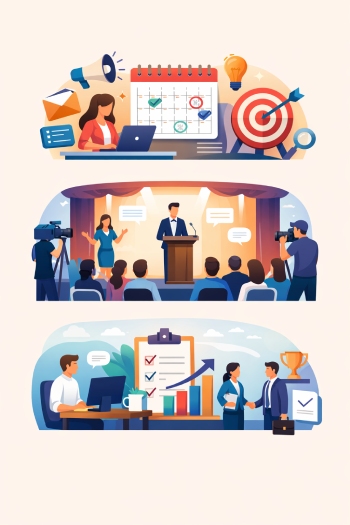
Small misses early in the planning process don't stay small. They compound - weak registration numbers, confused sponsors, attendees who show up underprepared - and by event week, you're firefighting instead of executing.
A clear timeline changes that. Structured week-by-week planning aligns your team, keeps stakeholders informed, and reduces the last-minute scramble that drains budgets and goodwill. This article walks you through exactly what to prioritize 12 weeks out, what to manage in real time on event day, and what to complete in the weeks after to protect your ROI and build a stronger next event.
Build the Marketing Foundation 12 to 6 Weeks Before
Decisions made in this window will either hold the campaign together or quietly unravel it by week eight. This is where you lock in strategy before the pressure of live promotions makes pivoting expensive.
Start by defining measurable goals: registration targets, sponsor impression benchmarks, email open rate thresholds. Without these, you're optimizing for nothing. Alongside goals, map your audience segments. A corporate conference attracting both C-suite buyers and junior practitioners needs different messaging tracks, not one generic blast.
Positioning comes next. Write a single-sentence event value statement before touching any creative. It forces clarity and keeps copy consistent across channels.
Once messaging is settled, build your promotional calendar, assign creative deadlines, and set up your registration landing page. Collect speaker headshots, bios, and sponsor logos early. Teams routinely underestimate how long asset collection takes, and a missing logo at launch is a real problem.
Use an approval tracker, even a simple shared spreadsheet, to keep reviews moving without email chains stalling momentum.
Accelerate Promotion and Confirm Readiness in the Final Weeks
Visibility, coordination, and security coalesce only a few weeks before an event. Planning may create the foundation, but these weeks spell out the effectiveness of that base and translate it to attendance and experience. It is not about enhancing promotion alone but about tuning clarity within the essence of basic as well as logistics of everything else with all N factors on show, to minimize misgivings.
Weeks Six Through Three: Build Momentum
Six weeks out is when passive promotion becomes active pressure. Launch your email sequences now - a three-part series works well: awareness, urgency, last-chance. Paid social campaigns should run on LinkedIn or Meta targeting job titles and interests that match your attendee profile. Ask sponsors and partners to amplify posts on their own channels; give them pre-written copy so there's no delay. Retargeting ads aimed at website visitors who haven't registered yet tend to convert at higher rates than cold audiences at this stage.
Weekly attention: review registration conversion trends and adjust spend toward channels performing above benchmark.
The Final Two Weeks: Operational Readiness Is Marketing
Signage, branded backdrops, and printed materials need to be confirmed - not ordered. Brief your on-site staff on key attendee messaging and session highlights so every interaction feels consistent. Align with your content team on what gets captured: speaker moments, crowd reactions, sponsor visibility. For hybrid or virtual components, test your platform and prepare engagement prompts in advance. Daily attention here: monitor registration numbers and send a reminder sequence to soft leads still sitting on the fence.
Run the Event Strong and Follow Up Fast Afterward
Live day execution and post-event follow-up aren't separate phases - they're one continuous marketing motion. Drop the ball on either, and you lose momentum you spent 12 weeks building.
During the event, assign someone specifically to real-time social coverage: post session highlights, share speaker quotes, and keep your event hashtag active. Lead capture needs a dedicated owner too - whether that's badge scanning, form submissions, or a simple check-in list. Sponsor visibility should be verified on-site, not assumed. If something breaks, respond publicly and quickly; attendees notice silence more than problems.
The 48 hours after the event close matter more than most teams realize. Send thank-you emails the same day, route captured leads to sales within 24 hours, and distribute recordings or slides before interest fades. Surveys sent within two days get dramatically higher response rates than those sent a week later.
By the two-week mark, publish a recap on owned channels, deliver sponsor outcome reports, and hold your post-event wrap-up meeting. That debrief is where next year's event actually starts.
A Clear Timeline Keeps Event Marketing on Track
Event marketing is not so much about doing everything but doing the right job at the right time. Work on getting everything locked down at the beginning - goals, messaging, registration infrastructure - before you start promoting it. Getting the word out further as you near the event means lots of feedback around registrant behavior and channel performance. During the event, maintain a strong level of communication and be there with the attendees. Then follow through on those kudos with post-event follow-up - surveys, thank-you emails, lead handoff - they lose lots of bites if not executed in time. A set time linear event process and a solid tool kit are a sure way to clear all doubt in any phase and reduce last-minute complaining from all sides. Run once; iron out the kinks and start anew on the next event.